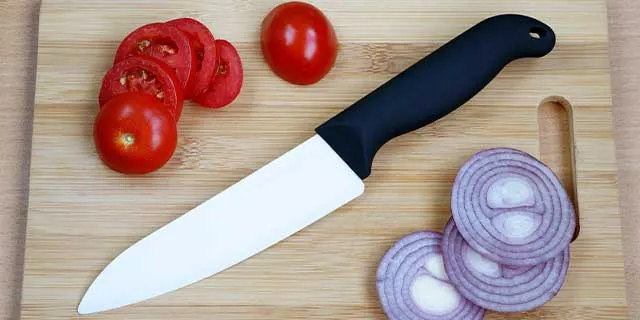
Ceramic knives have become a popular choice in both home and professional kitchens, admired for their sharpness, light weight, and resistance to rust. But many people still wonder: what material are ceramic knives made of, and what makes them so different from traditional steel blades? The answer lies in a remarkable substance called zirconia, or zirconium dioxide, which gives these knives their unique properties.
Understanding the science behind ceramic blades can help you decide if they’re right for your kitchen and how to care for them properly. This article explores the composition, manufacturing process, and performance of ceramic knives, highlighting the role of zirconia and how it compares to metal alternatives.
For a deeper look at the advantages and limitations of ceramic blades, you may find this comprehensive guide to ceramic knives especially useful.
The Core Ingredient: Zirconium Dioxide (Zirconia)
The defining feature of ceramic knives is their blade material. Unlike metal knives, which are forged from various steel alloys, ceramic blades are crafted from zirconium dioxide, also known as zirconia. This advanced ceramic is a white, crystalline oxide of zirconium, prized for its exceptional hardness and chemical stability.
Zirconia is not the same as the ceramics used for pottery or tiles. It is a high-tech material engineered for strength and durability. In fact, on the Mohs scale of mineral hardness, zirconia rates at about 8.5, making it significantly harder than stainless steel (which typically ranges from 5 to 6.5). Only diamonds, sapphires, and a few other materials are harder.
How Ceramic Blades Are Manufactured
The process of making a ceramic knife blade involves several precise steps:
- Powder Preparation: Ultra-fine zirconium dioxide powder is mixed with binders and shaped into a blade form using a mold.
- High-Pressure Forming: The shaped powder is compressed under immense pressure to achieve density and remove air pockets.
- Sintering: The compacted blade is fired in a kiln at temperatures exceeding 1,000°C (1,832°F). This process, known as sintering, fuses the particles together, resulting in a dense, solid ceramic blade.
- Sharpening: The hardened blade is ground and polished with diamond-coated wheels, as only diamond abrasives are hard enough to shape zirconia.
The result is a blade that is extremely sharp, lightweight, and resistant to corrosion, thanks to the properties of zirconia.
Why Choose Zirconia for Kitchen Knives?
The use of zirconium dioxide in knife blades offers several advantages:
- Hardness: The extreme hardness of zirconia allows ceramic knives to maintain a razor-sharp edge much longer than most steel knives.
- Corrosion Resistance: Unlike metal, zirconia does not react with acids, salts, or moisture, so the blade will not rust or corrode.
- Lightweight: Ceramic blades are much lighter than steel, making them easy to handle and reducing fatigue during repetitive tasks.
- Non-reactive: The inert nature of zirconia means it won’t transfer metallic tastes or odors to food, and it won’t discolor fruits and vegetables.
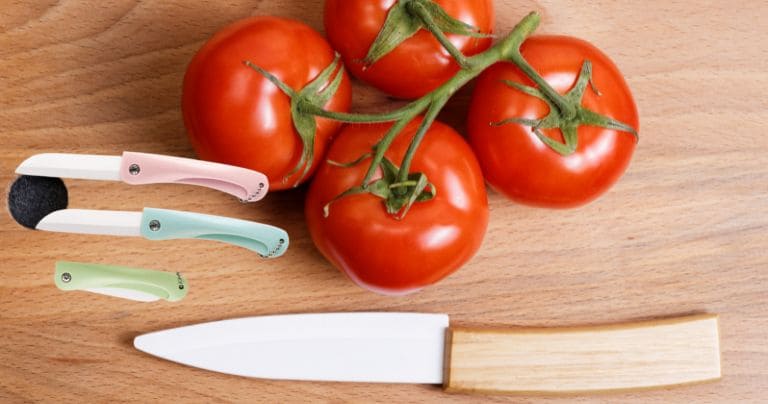
These properties make ceramic knives especially suitable for slicing fruits, vegetables, and boneless meats. However, their hardness also means they can be brittle and prone to chipping if used on hard surfaces or for prying tasks.
Ceramic Blades vs. Metal Knives: Key Differences
Comparing ceramic and metal knives highlights the unique benefits and limitations of each:
| Feature | Ceramic (Zirconia) | Metal (Steel) |
|---|---|---|
| Hardness | Very high (Mohs 8.5) | Moderate (Mohs 5–6.5) |
| Edge Retention | Excellent | Good, but requires regular sharpening |
| Corrosion Resistance | Does not rust or corrode | Can rust if not cared for |
| Weight | Light | Heavier |
| Brittleness | Can chip or break if misused | More flexible, less prone to chipping |
| Sharpening | Requires diamond tools | Can be sharpened with standard tools |
While ceramic knives excel at specific tasks, they are not a complete replacement for steel knives in every kitchen situation.

Care and Maintenance of Zirconia Knives
To get the most from your ceramic kitchen tools, proper care is essential:
- Use only for slicing fruits, vegetables, and boneless meats—avoid cutting bones, frozen foods, or hard items.
- Always use a soft cutting board, such as wood or plastic, to prevent chipping the blade.
- Hand wash with mild detergent and dry promptly; avoid dishwashers, as the blade can knock against other utensils.
- Store separately from metal knives to prevent accidental chips or nicks.
- If sharpening is needed, take the knife to a professional or use a diamond sharpener designed for ceramics.
With these precautions, a zirconia blade can stay sharp and functional for years.
Frequently Asked Questions
Are ceramic knives safe to use with all foods?
Yes, ceramic knives made from zirconium dioxide are non-reactive and safe for most foods. They are ideal for fruits, vegetables, and boneless meats. However, avoid using them on hard foods like bones or frozen items, as this can cause the blade to chip.
How do you sharpen a ceramic knife?
Because zirconia is extremely hard, ceramic knives require a diamond abrasive sharpener. Standard knife sharpeners will not work. Many users prefer to have their ceramic knives professionally sharpened to maintain the correct angle and avoid damage.
Why do ceramic knives stay sharp longer than steel knives?
The hardness of zirconium dioxide means the blade edge resists wear and deformation much better than steel. As a result, ceramic knives retain their sharpness for a longer period, especially when used for appropriate tasks and cared for properly.