When it comes to materials used in everything from kitchen knives to industrial tools, the question often arises: is ceramic harder than steel? Both substances play crucial roles in modern manufacturing and daily life, but they have very different properties. Understanding the differences in hardness, strength, and practical applications can help you choose the right material for your needs.
In this article, we’ll break down what “hardness” and “strength” really mean, how ceramics and steel compare, and what these differences mean for real-world uses. Whether you’re curious about the science behind your kitchen tools or considering materials for engineering projects, this guide will clarify the facts.
For those interested in the specifics of ceramic knives and their performance, you can find a detailed overview in this comprehensive article about ceramic knives.
Understanding Hardness: Ceramics Versus Steel
The term hardness refers to a material’s resistance to scratching, indentation, or abrasion. It’s measured using several scales, with the Mohs scale and the Vickers hardness test being among the most common. When comparing ceramics and steel, it’s important to note that both categories include a wide range of specific materials, each with its own properties.
How Ceramics Measure Up in Hardness
Most technical ceramics, such as zirconia and alumina, are known for their exceptional hardness. On the Mohs scale, many ceramics rate between 7 and 9, with diamond (the hardest known material) at 10. For example, zirconia, often used in knife blades, has a Mohs hardness of about 8.5.

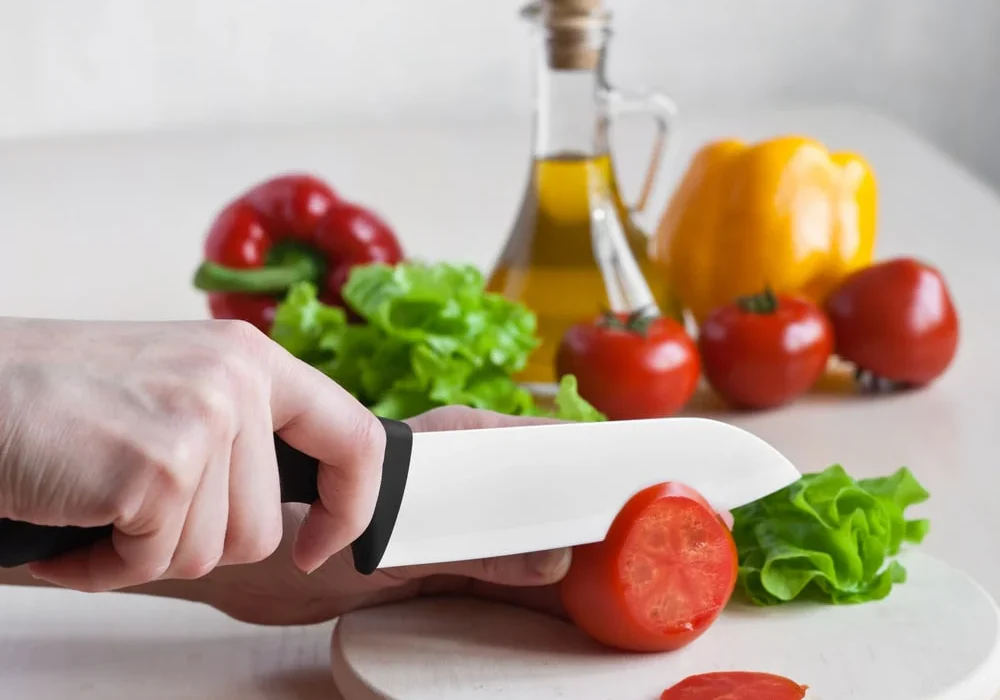
This high level of hardness means ceramics are extremely resistant to scratches and can maintain a sharp edge for a long time. That’s why ceramic knives stay sharp much longer than many steel knives, making them popular in kitchens and laboratories.
Steel’s Hardness: A Wide Range
Steel is an alloy, primarily of iron and carbon, and its hardness varies greatly depending on its composition and treatment. Stainless steel, carbon steel, and tool steel all have different properties. On the Mohs scale, hardened steel typically falls between 4 and 8, depending on the specific type and heat treatment.
While some specialty steels can approach the hardness of ceramics, most everyday steels are softer. However, steel’s unique combination of hardness, toughness, and ductility makes it extremely versatile and reliable for a wide range of applications.
Comparing Strength: What Does “Stronger” Really Mean?
While is ceramic harder than steel is a common question, it’s important to distinguish between hardness and strength. In materials science, “strength” often refers to a material’s ability to withstand force without breaking or deforming. There are several types of strength, including tensile, compressive, and fracture strength.
Ceramics: Hard but Brittle
Ceramics are extremely hard but also brittle. This means they resist scratches and wear but can crack or shatter under impact or bending forces. Their atomic structure, which gives them their hardness, also makes them less able to absorb energy before breaking.
For example, a ceramic knife can slice through soft foods with ease and maintain its edge for a long time, but it may chip or break if dropped or twisted.
Steel: Toughness and Ductility
Steel, while often softer than ceramics, is much tougher. Toughness is the ability to absorb energy and deform without breaking. Steel can bend, flex, and absorb impacts that would shatter a ceramic of similar hardness. This makes steel ideal for tools, construction, and applications where durability and resistance to breakage are crucial.
Real-World Applications: When to Choose Ceramic or Steel
The differences in hardness and strength between ceramics and steel influence their uses in everyday life and industry. Here’s how these properties play out in common applications:
- Kitchen knives: Ceramic blades stay sharper longer and resist staining, but they can chip or break if misused. Steel knives are easier to sharpen, more forgiving of rough handling, and less likely to break.
- Industrial tools: Ceramic components are used in environments where wear resistance is critical, such as in bearings or cutting tools for hard materials. Steel is preferred for tools that need to withstand impact or repeated stress.
- Medical and scientific equipment: Ceramics are chosen for their chemical inertness and hardness, while steel is used where flexibility and toughness are needed.
Summary Table: Key Differences Between Ceramics and Steel
| Property | Ceramic | Steel |
|---|---|---|
| Hardness | Very high (Mohs 7–9) | Moderate to high (Mohs 4–8) |
| Toughness | Low (brittle) | High (ductile and tough) |
| Edge retention | Excellent | Good, but requires sharpening |
| Resistance to corrosion | Excellent | Varies (stainless steel is good) |
| Impact resistance | Poor | Excellent |
| Ease of sharpening | Difficult | Easy |
Factors to Consider When Choosing Between Ceramic and Steel
If you’re deciding between these two materials, consider the following:
- Intended use: For applications where edge retention and wear resistance are most important, ceramics excel. For situations requiring toughness and flexibility, steel is the better choice.
- Maintenance: Ceramic blades need less frequent sharpening but require careful handling. Steel blades are easier to maintain but may need regular sharpening.
- Cost: High-quality ceramics can be more expensive upfront, but their longevity may offset the cost over time.
- Risk of breakage: If you need a tool that can withstand drops or rough use, steel is generally safer.
Frequently Asked Questions
Are all ceramics harder than all steels?
Not necessarily. While most technical ceramics are harder than common steels, some specialty steels can approach or even exceed the hardness of certain ceramics. However, ceramics generally have a higher maximum hardness.
Why do ceramic knives chip more easily than steel knives?
Ceramics are very hard but also brittle. This means they resist scratches but can crack or chip under impact or twisting forces. Steel, while softer, is tougher and can absorb more energy without breaking.
Which material is better for kitchen knives: ceramic or steel?
It depends on your needs. Ceramic knives stay sharp longer and resist staining but are more fragile. Steel knives are more durable and versatile but require regular sharpening. Many chefs use both, choosing the right tool for each task.
Can ceramics rust like steel?
No, ceramics do not rust because they do not contain iron. This makes them ideal for environments where corrosion resistance is important.
Is it possible to sharpen ceramic blades at home?
Sharpening ceramic blades is challenging and usually requires diamond abrasives. Most people send ceramic knives to professionals for sharpening.