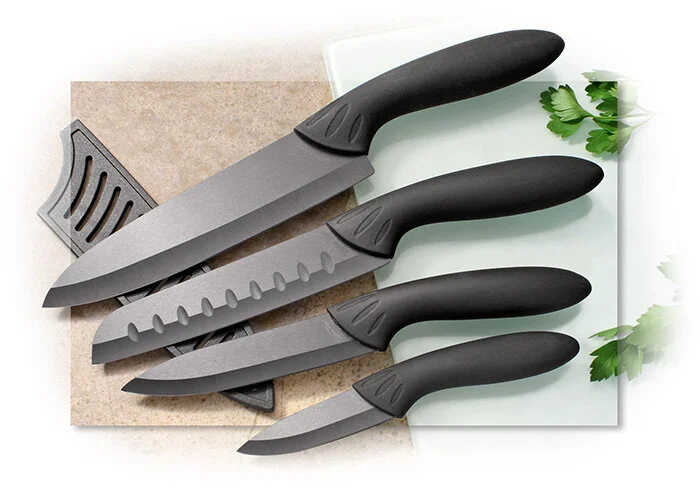
The ceramic knife manufacturing process is a fascinating blend of advanced materials science and precise engineering. Unlike traditional steel knives, ceramic blades are crafted from ultra-hard materials that deliver exceptional sharpness and durability. Understanding how these knives are made—from the initial powder to the finished blade—reveals why they have become a popular choice in both professional and home kitchens.
In this article, we’ll explore each stage of production, highlighting the unique properties of ceramic materials and the steps that transform raw powders into high-performance cutting tools. For those interested in the advantages and disadvantages of these blades, you can find a detailed breakdown in this comprehensive guide to ceramic knife pros and cons.
Before diving into the technical details, it’s important to note that ceramic knives are valued for their lightweight feel, resistance to corrosion, and ability to maintain a sharp edge for extended periods. These qualities stem directly from the meticulous steps involved in their creation.
Raw Materials: The Foundation of Ceramic Blades
The journey begins with the selection of high-purity ceramic powders, most commonly zirconium dioxide (zirconia). This material is chosen for its remarkable hardness, which rivals that of diamonds. The powder is carefully measured and often mixed with small amounts of binder and stabilizers to improve its workability during later stages.
The quality of the initial powder directly influences the final product. Impurities or inconsistencies at this stage can lead to weak spots or defects in the finished blade. Manufacturers invest heavily in sourcing and preparing the purest possible zirconia to ensure the resulting knives meet strict performance standards.
Forming the Blade: Pressing and Shaping Techniques
Once the powder mixture is ready, it is shaped into the rough form of a knife blade using a process called cold isostatic pressing or uniaxial pressing. In cold isostatic pressing, the powder is placed in a flexible mold and subjected to uniform pressure from all directions. This compacts the material into a dense, cohesive “green body” that holds its shape but is still fragile.
The pressed blanks are then trimmed and pre-shaped, often using precision molds or dies. At this stage, the blade is slightly oversized to account for shrinkage during the upcoming sintering process. Careful handling is essential, as the green body can easily crack or deform.
Sintering: Transforming Powder into a Solid Blade
The next critical phase is sintering, where the shaped ceramic is heated in a high-temperature furnace—often exceeding 1,400°C (2,552°F). This intense heat causes the zirconia particles to bond together, eliminating pores and dramatically increasing the material’s strength and hardness.
During sintering, the blade shrinks to its final dimensions and acquires the dense, glass-like structure that gives ceramic knives their renowned sharpness and durability. The process must be carefully controlled to prevent warping or the formation of internal stresses that could compromise the blade.
Grinding and Polishing: Achieving a Razor-Sharp Edge
After sintering, the blade is extremely hard but still requires finishing. Specialized diamond grinding wheels are used to shape the edge and refine the profile. This step demands precision, as ceramic is brittle and can chip if handled improperly.
The edge is ground to a fine angle, often between 10 and 15 degrees per side, resulting in a blade that can slice through food with minimal resistance. Polishing follows, giving the knife a smooth, glossy finish and further enhancing its cutting performance.

Quality Control and Final Assembly
Each finished blade undergoes rigorous quality checks to ensure it meets strict standards for sharpness, strength, and uniformity. Any blade that fails inspection is rejected or recycled. Handles are then attached, typically made from lightweight polymers or composite materials that complement the ceramic’s properties.
The assembled knives are cleaned, packaged, and prepared for shipment. The result is a tool that offers exceptional performance for slicing fruits, vegetables, and boneless meats, with minimal maintenance required.
Advantages and Limitations of Ceramic Knife Production
The advanced ceramic knife manufacturing process produces blades that are exceptionally sharp, lightweight, and resistant to rust and acids. However, the same hardness that makes them so effective also means they can be brittle and prone to chipping if used improperly.
Manufacturers continue to refine their techniques, seeking ways to improve toughness and expand the range of tasks these knives can handle. For many users, the benefits—long-lasting sharpness, easy cleaning, and a modern aesthetic—make ceramic knives a valuable addition to the kitchen.
Frequently Asked Questions
What materials are used to make ceramic knives?
The primary material is zirconium dioxide (zirconia), a ceramic compound known for its exceptional hardness and durability. Small amounts of binders and stabilizers are sometimes added to improve processing and final properties.
How are ceramic blades different from steel knives?
Ceramic blades are much harder and lighter than steel, allowing them to maintain a sharp edge for longer periods. They are also resistant to corrosion and do not react with acidic foods. However, they can be more brittle and are not suitable for cutting bones or frozen foods.
Can ceramic knives be sharpened at home?
While ceramic knives hold their edge well, they do eventually require sharpening. Because of their hardness, they must be sharpened with diamond abrasives. Some manufacturers offer professional sharpening services, but specialized home sharpeners are also available.