A damascus steel knife explanation brings clarity to a subject that has fascinated knife enthusiasts, chefs, and collectors for centuries. These blades are renowned for their distinctive wavy patterns, impressive strength, and sharpness. But what exactly sets them apart, and why do they continue to capture attention in both modern kitchens and historical collections?
Understanding the origins, forging process, and practical benefits of these knives can help anyone appreciate their value and decide if they belong in their own toolkit. This article offers a practical overview, demystifying the key aspects of these unique blades and providing insight into what makes them so special.
To further explore the craftsmanship behind these blades, you can learn more about forging techniques and processes used in high-quality knife making.
Origins and History of Patterned Blades
The story of these knives begins in ancient times, with roots tracing back to the Middle East and South Asia. The original technique, often referred to as “wootz” steel, was developed in India as early as 300 BC. This early steel was exported to Damascus, Syria, where skilled smiths crafted the legendary blades that would later inspire the name “Damascus steel.”
These historical blades were prized for their ability to hold a keen edge and their resilience in battle. Over time, the original methods were lost, but the reputation of the patterned steel lived on. Modern smiths have revived the tradition using different techniques, but the visual appeal and performance of these knives remain highly sought after.
How Modern Damascus Blades Are Made
Today, the process of creating these knives involves layering two or more types of steel, then repeatedly forging, folding, and welding them together. This results in a blade with alternating layers that produce the signature flowing patterns.
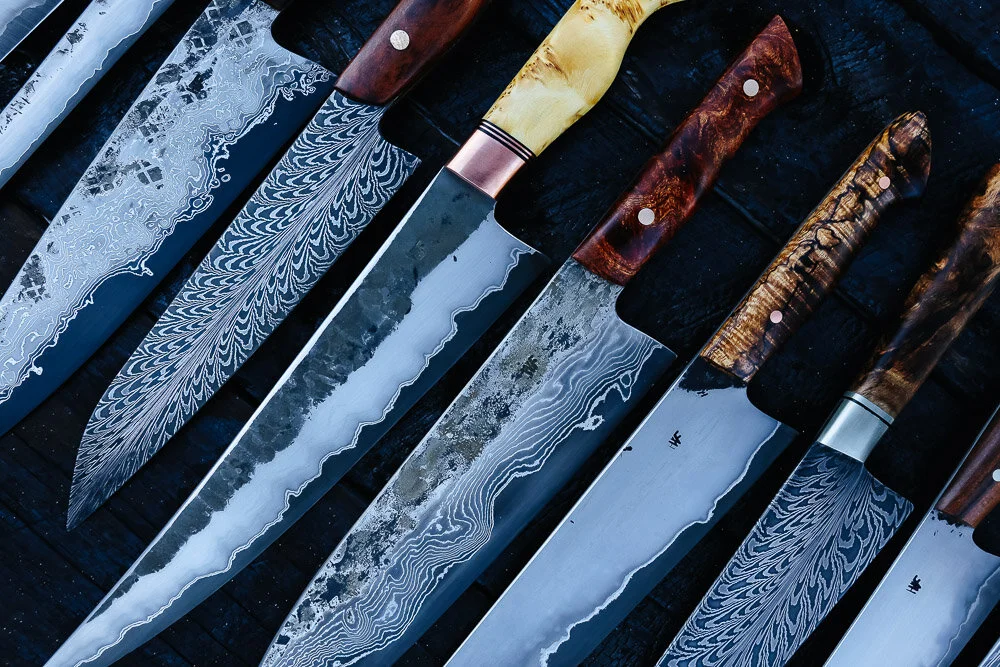
The most common method is called pattern welding. Smiths select steels with complementary properties—typically a hard, high-carbon steel for sharpness and a softer, more flexible steel for toughness. By folding and twisting the layers, artisans can create a variety of intricate designs, from subtle waves to bold, ladder-like patterns.
After forging, the blade is acid-etched to reveal the contrasting layers. This step highlights the unique patterns and gives each knife its one-of-a-kind appearance.

Key Features and Benefits of Pattern-Welded Knives
A well-made patterned blade offers several advantages. The combination of different steels can result in a knife that is both hard enough to maintain a sharp edge and tough enough to resist chipping or breaking. The layered construction also provides a degree of flexibility, making the blade less likely to snap under stress.
Beyond performance, the visual appeal is a major draw. The swirling, water-like patterns are not just decorative—they are a testament to the skill and artistry of the bladesmith. Each knife is unique, with its own distinct pattern that cannot be exactly replicated.
- Edge retention: The hard steel layers help the blade stay sharp for longer periods.
- Durability: The softer layers add toughness, reducing the risk of brittle fractures.
- Corrosion resistance: Some modern versions use stainless steels, making them easier to maintain.
- Unique appearance: No two blades have the same pattern, adding to their collectible value.
Common Myths and Misconceptions
Despite their reputation, there are several myths surrounding these knives. One common belief is that they are always superior to other types of blades. In reality, the quality depends on the skill of the maker and the materials used. Not all patterned knives are created equal, and some mass-produced versions may prioritize appearance over performance.
Another misconception is that the original forging secrets have been fully rediscovered. While modern smiths have developed impressive techniques, the exact methods used to create the ancient “wootz” steel remain a subject of ongoing research and debate.
It’s also important to note that the beautiful patterns do not automatically guarantee better cutting ability. The performance of a knife depends on factors such as blade geometry, heat treatment, and the intended use.
Choosing the Right Patterned Blade for Your Needs
When selecting a knife with this distinctive construction, consider your intended use. For kitchen tasks, look for blades that balance hardness and toughness, with a comfortable handle and a blade shape suited to your cooking style. For collectors, the uniqueness of the pattern and the reputation of the maker may be more important.
Pay attention to the type of steel used, the quality of the forging, and the finish. High-quality examples will have clean, well-defined patterns and a smooth, even edge. Avoid knives that seem overly decorative but lack information about their construction or materials.
Maintenance is another factor. While many modern versions offer improved corrosion resistance, all knives benefit from regular cleaning, drying, and occasional oiling to preserve their appearance and performance.
FAQ: Damascus Steel Knife Insights
What makes these knives different from regular steel blades?
The main difference lies in the layered construction, which combines multiple types of steel to achieve a balance of sharpness, toughness, and flexibility. The resulting patterns are a visual indicator of this process, setting these knives apart from single-steel blades.
Are all patterned knives made the same way?
No, there are several methods for creating the signature patterns. The most common modern approach is pattern welding, but some manufacturers use etched designs or printed finishes that only mimic the look. Authentic examples are forged from multiple layers of steel.
How should I care for a blade with this construction?
Proper care involves hand washing, thorough drying, and occasional oiling to prevent rust. Even if the knife is made from stainless steel, avoiding prolonged exposure to moisture will help maintain its appearance and performance.
Conclusion: Appreciating the Craft and Utility
A clear damascus steel knife explanation reveals that these blades are more than just visually striking tools—they represent a blend of history, craftsmanship, and practical performance. Whether used in the kitchen or displayed in a collection, their unique patterns and balanced properties continue to make them a favorite among knife enthusiasts. By understanding their origins, construction, and care requirements, anyone can make an informed decision about adding one of these remarkable knives to their own set.